

A stop in rural Floyd County turned into a hands-on geology lesson this week as Iowa
Republican gubernatorial candidate Brad Sherman toured karst terrain near Rudd, meeting with
landowners concerned about the proposed carbon dioxide pipeline route and potential wind
energy development in the area.
The visit focused on how unstable underground conditions could affect construction, water
quality and land stability. Sherman met with local residents near Rudd and Rockford to view
sinkholes, springs and other karst features along what is believed to be part of the proposed
pipeline’s path.
Earlier in the day, Sherman met with landowners Kathy Carter and Jim Jorgensen in the
Rockford area to discuss the proposed route and to view a spring located along the project’s
anticipated path. They began east of Rockford in Ulster Township and traveled west to the
county line.
The group later reconvened at the Jorgensen farm northeast of Rudd, where Sherman and his
wife, Carole, joined several residents and karst specialist Derek Straube for a boots-on-the-
ground look at the terrain. Also attending were landowner Jayden Jorgensen and
landowner Doug Groshen.
Karst topography is characterized by soluble rock, underground drainage, sinkholes and rapidly
changing subsurface conditions. In parts of Floyd County, these features can appear suddenly.
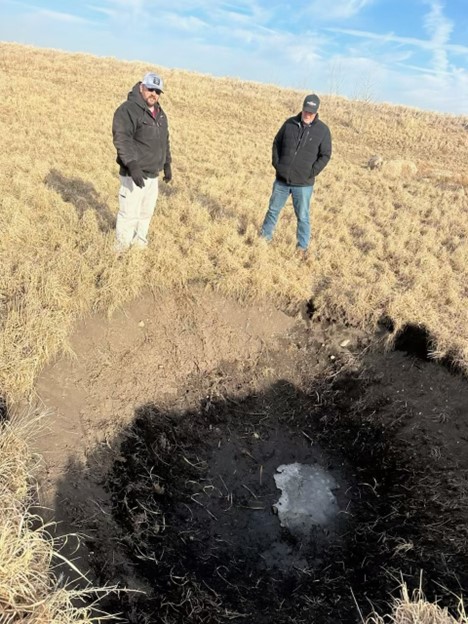
During the tour, the group observed a new sinkhole that had formed since November.
“The biggest takeaway was the new hole that wasn’t there just a few months ago,” Jorgensen
said. “It’s shocking how quickly they can appear.”
Straube explained the area’s geology and the potential risks of construction on karst terrain.
Landowners shared concerns about the proximity of the proposed pipeline and the possibility of
wind turbine development in areas with unstable underground formations.
Sherman commented on the day,” Spending the day in Floyd County provided a real-life look at why folks are concerned about their property and the future of their community. We saw the proximity of the proposed CO2 pipeline and got a clear sense of the danger it poses. We got an up close look at the sinkholes in the karst geography and a good understanding of why wind turbines raise serious concerns in the region. Thank you to Kathy, Jim, Derek, Jayden, and Doug for taking the time to show Carole and me around. It was one of the best days yet in our campaign for Governor. Property rights and taking care of rural Iowa is a top priority.”
Carole Sherman said it was important to see the proposed route firsthand.
“This private company project should not be allowed to use eminent domain to come through on
people’s property,” she said. “It was good to see firsthand how close it would be to people’s
homes, the town, school and waterways. We also saw the karst and sinkholes, which would
cause great instability with the pipeline and wind turbines trying to come into the area.”
“They were shocked and amazed,” Jorgensen said of the Shermans. “There were strong
concerns about water health and the safety of citizens.”
Carter said the tour reshaped her understanding of the county’s geography.
“Being a native of Floyd County and now a senior citizen, I thought I knew a lot about our
county’s geography,” she said. “I always thought ‘karst’ was in far northeast Iowa, around
Decorah and Waukon. After Friday’s tour of numerous sinkholes, I’ve learned how wrong I was.”
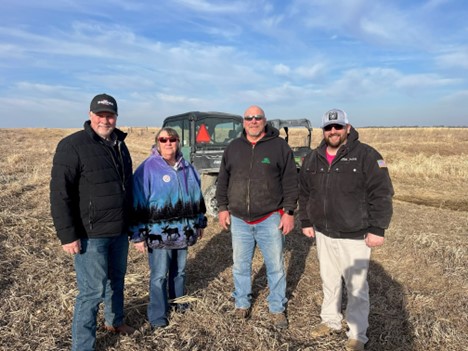
gubernatorial candidate Brad Sherma along with landowner Kathy Carter, Jim Jorgensen and Derek Straube on a tour of Karst Topography near Rudd
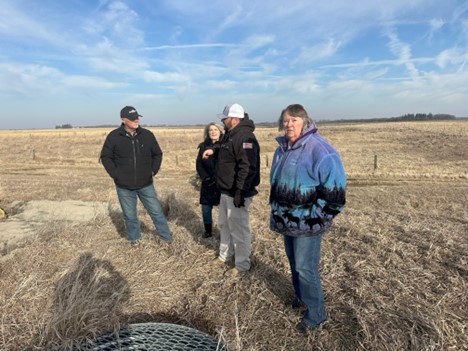
Brad and Carole Sherman (in background) along with Rockford land owner Kathy Carter (foreground) learn about Karst Topography from Derek Straube who has studied Karst extensively.
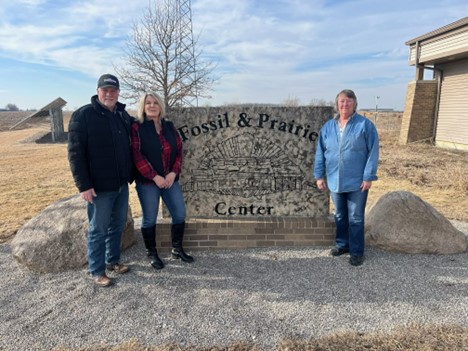
Gubernatorial Candidate Brad Sherman and wife Carole along with Rockford resident Kathy Carter tour Rockford and Rudd areas of Karst topography. They also took in sites like the Rockford Fossil Park.
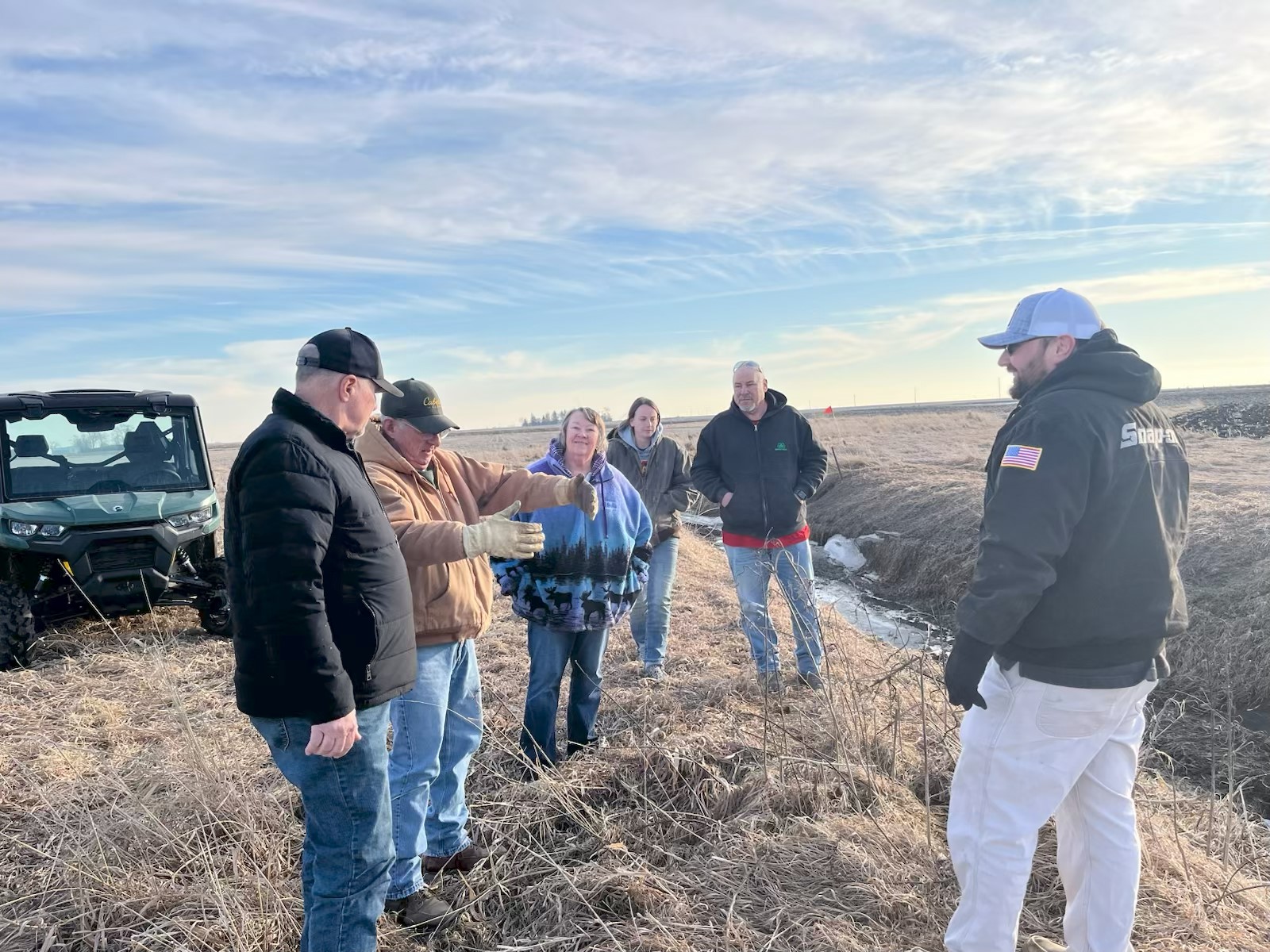
Brad Sherman (left), Landowners Doug Groshen, and Kathy Carter along with Jayden and Jim Jorgensen and Derek Straube stop to discuss Karst topography.